
The top health benefits of blueberries are their antioxidants, fiber, vitamin C, vitamin K and manganese, all for about 85 calories per cup. Blueberries rank among the most antioxidant-rich fruits, which helps protect cells from damage. They also support heart health, bone health and fullness, and they’re easy to add to almost any meal.
By A’verria Martin, Ph.D.
Here are five powerful reasons to eat more of them: antioxidants, heart and brain support, stronger bones, better digestion and very few calories. Blueberries are one of my favorite examples of how small foods deliver big results. As the weather warms up, I always turn my attention to beautiful sun-kissed fruits. That’s because most fruits are at their peak in summer, which makes them perfect for summer dining. So this week, we’re talking about blueberries. After all, this tiny berry is one of nature’s treasures and packs a powerful nutritional punch!
Blueberry nutrition and health benefits at a glance
According to USDA data, 1 cup of fresh blueberries has roughly:
- Calories: about 85, with almost no fat
- Fiber: about 3.5 grams (roughly 13% of the daily value)
- Vitamin K: about 24% of the daily value
- Manganese: about 20% of the daily value
- Vitamin C: about 15% of the daily value
You can look up any food in the USDA’s FoodData Central database.
Health benefits of blueberries: antioxidants
Most importantly, blueberries are among the most antioxidant-rich fruits and vegetables. In fact, their deep blue color comes from anthocyanins, a type of polyphenol. Plus, blueberries provide vitamin C and small amounts of vitamin E.
Why does that matter? The health benefits of blueberries start with this: antioxidants help protect cells from unstable molecules called free radicals. These free radicals form when your body breaks down food or when you’re exposed to things like tobacco smoke, pollution and UV radiation. As a result, over time they can damage cell structures and DNA, and oxidative stress is linked to heart disease, some cancers and other chronic diseases. In addition, research suggests diets rich in berries may support healthy blood pressure and brain health as we age.
More health benefits of blueberries: vitamin K and manganese for strong bones
Next, blueberries are a good source of vitamin K, best known for its role in normal blood clotting. Vitamin K also helps your body use calcium to build bone. In addition, blueberries provide manganese, a mineral that contributes to bone development and helps your body convert proteins, carbohydrates and fats into energy.
One caution: if you take a blood thinner such as warfarin, keep your vitamin K intake consistent and talk with your doctor before making big changes to your diet.
Health benefits of blueberries for digestion and fullness
Fiber is multifunctional. For example, it aids digestion, keeps you satisfied, supports heart health and helps lower LDL, or “bad,” cholesterol. So because blueberries are low in calories and high in water and fiber, they’re a sweet treat that fits almost any nutrition plan.
Easy ways to enjoy the health benefits of blueberries
Blueberries are a wonderful addition to just about anything. For instance, you can stir them into nonfat Greek yogurt with a few walnuts, or add them to your morning oatmeal or overnight oats for a fun twist. Also, frozen blueberries are just as nutritious as fresh, so keep a bag in the freezer year-round.
Blueberry recipes that deliver the health benefits of blueberries
These two recipes make it easy to get the health benefits of blueberries at breakfast and dinner.
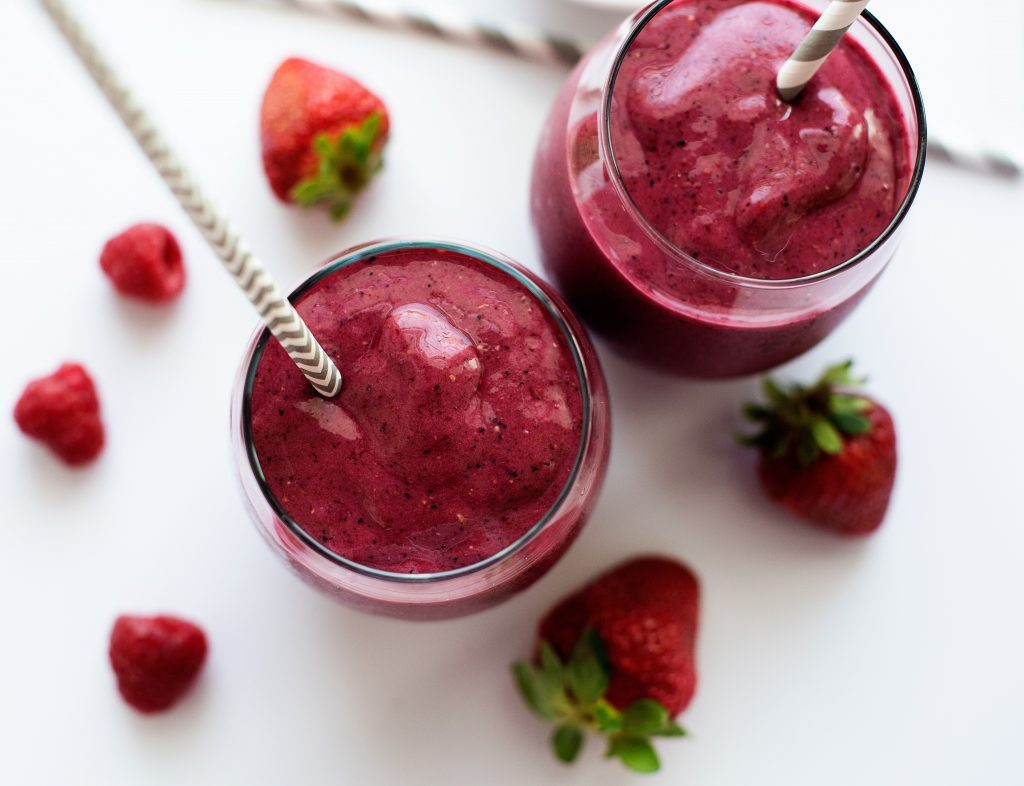
Blueberry and cacao smoothie
Ingredients: 1 1/2 cups coconut or almond milk (use a little more for a thinner smoothie); 1 cup blueberries, fresh or frozen (wild or organic if you like); 1 to 2 tsp cacao powder; 1 to 2 tsp agave nectar or honey; 1/2 cup ice.
Instructions: Add everything to a blender and blend until smooth. To make it a more complete meal, add a scoop of protein powder or 1/2 cup Greek yogurt.
Blueberry shrimp salad
For the salad: 3/4 lb medium shrimp; 4 cups mixed salad greens; 1 cup fresh blueberries; 1/2 cup walnut pieces; 1/2 cup shelled edamame; 2 Tbsp red onion (optional).
For the lemon vinaigrette: 1/4 cup olive oil; juice of half a lemon; 1 to 2 tsp agave nectar; 1/8 tsp salt; 1/8 tsp pepper.
- Soak 4 to 5 wooden skewers in water for 30 minutes. Then spray the grill with olive oil cooking spray and preheat it to medium.
- Meanwhile, brush the shrimp with olive oil and season lightly with salt, pepper and minced garlic (optional).
- After that, thread the shrimp onto skewers and grill 2 to 3 minutes per side, until pink and opaque.
- While the shrimp cooks, whisk the dressing ingredients in a small bowl. Alternatively, simply use balsamic vinegar and olive oil.
- Next, toss the greens, blueberries, walnuts, edamame and onion with the dressing.
- Finally, top with the grilled shrimp and serve.
For more nutrient-dense foods, see the rest of the Eating for Success series, including the health benefits of nuts. Want a nutrition and training plan built for you? Text Chris at (619) 840-9099 for a free consultation at his private studio in Bay Park / Morena, San Diego.
This post was written by A’verria Martin, Ph.D. for the Eating for Success series and updated in 2026 by the Chris Keith Personal Training team with current nutrition information. Chris Keith has coached clients in San Diego for over 30 years. Contact Chris to get started.
Frequently Asked Questions
Have a question that isn’t covered here? See the full personal training FAQ.
Are blueberries good for you every day?
Yes. Eating a cup of blueberries daily is a healthy habit for most people. They’re low in calories and high in antioxidants, fiber and vitamins. If you take a blood thinner, keep your vitamin K intake consistent and check with your doctor.
Are frozen blueberries as healthy as fresh?
Yes. Frozen blueberries are picked ripe and frozen quickly, so they keep their nutrients well. They’re often cheaper, last for months, and work great in smoothies, oatmeal and baking.
Are wild blueberries healthier?
Wild blueberries are smaller and tend to have a higher concentration of anthocyanins per serving than cultivated blueberries. Both are very nutritious, so choose whichever you enjoy and can find.
Do blueberries help with weight loss?
They can support it. Blueberries are low in calories and rich in fiber and water, which helps you feel full. They make a great swap for sugary snacks and desserts.