
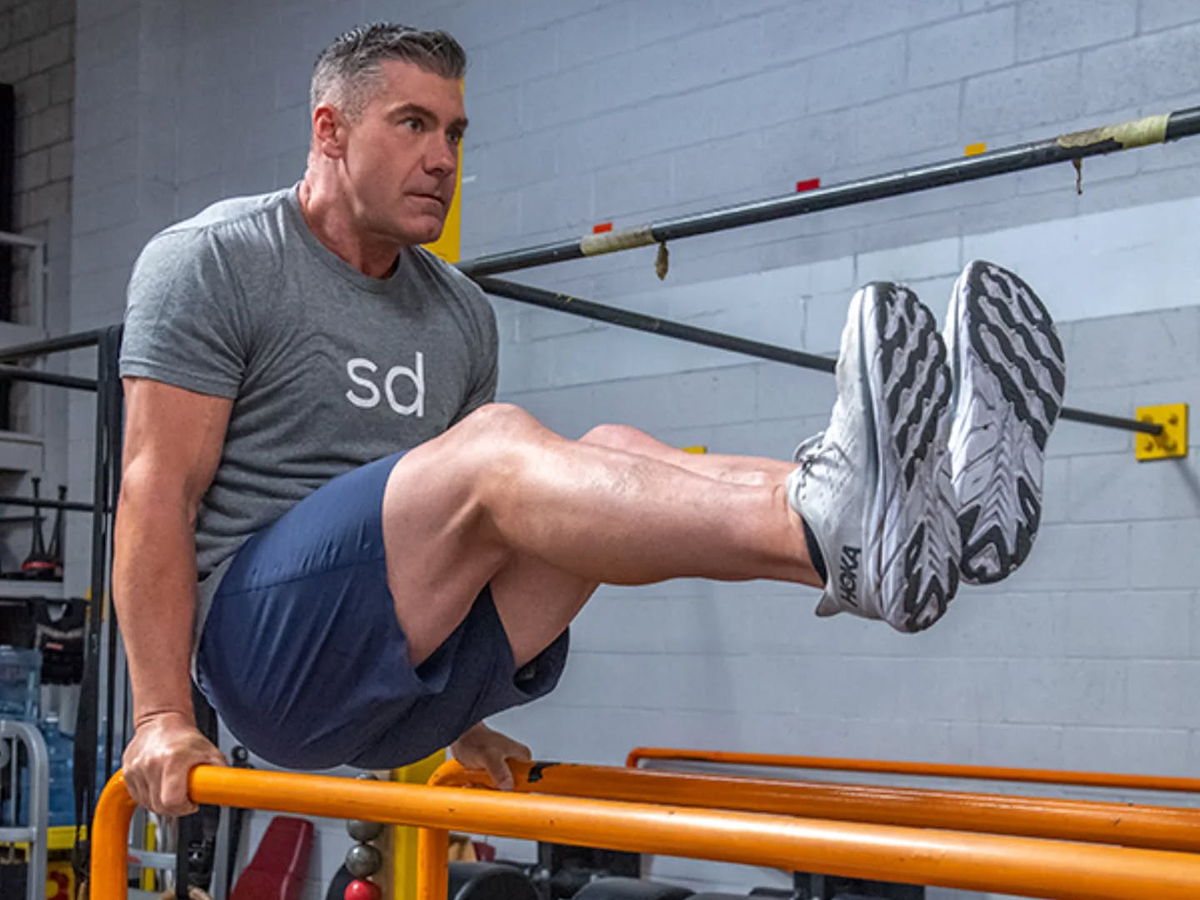
A solid police fitness test training plan takes about 8 weeks. You start with two weeks of foundation work, then spend two weeks building strength and running volume. Next come two weeks of test-specific event practice, and finally two weeks to sharpen and taper. So in practice, you’re looking at 4–5 sessions a week that mix running, carries and drags, pull-ups, squats, hinges and core work.
Chris Keith has over 30 years of personal training in San Diego, is a US Navy veteran, and trains adults 1-on-1 for strength and conditioning in San Diego.
What events are on the California police physical ability test?
First, know that most California agencies base their test on the POST Work Sample Test Battery. In fact, the San Diego Police Department says its Physical Abilities Test is modeled after the California POST Work Sample Test Battery that the academy uses. Specifically, SDPD lists these five events:
- 99-yard obstacle course: sharp turns, curb-height obstacles and a 34-inch vault.
- Dummy drag: lift and drag a 165-pound dummy for 32 feet.
- Chain link fence: run 5 yards, climb a 6-foot chain link fence, then run 25 more yards.
- Solid fence: run 5 yards, climb a 6-foot solid fence, then run 25 more yards.
- Distance run: a 500-yard run.
SDPD also offers free practice sessions at San Diego Police Plaza on Murphy Canyon Road. But its page doesn’t publish time limits or passing scores, so ask the recruiting team directly.
Do police fitness tests differ by agency?
Yes, and the differences matter. For example, the Carlsbad Police Department lists a 36-inch vault on its obstacle course and a 1.5-mile run instead of a 500-yard run. Carlsbad also gives two attempts on the first four events with a 2-minute rest between, counts the faster time, and requires a cumulative score of 384 points.
That’s why your first step is finding your agency’s current standards. Events, distances and scoring can change, too, so confirm everything with the hiring agency before test day. In short, train for the general format first, then dial it in for your specific test.
Is 8 weeks enough time for a police fitness test training plan?
For most reasonably active adults, 8 weeks is enough to get noticeably better at these events. But if you’re starting from zero, give yourself longer and treat this plan as your second phase. Also, coming back from an injury? Then start with something gentler, like our guide to strength training after physical therapy.
Before you begin, get a doctor’s clearance, especially if you have heart, joint or back issues. Also, keep in mind this is a sample plan, not a program built around you. So if you need to slow it down, that’s okay.
What does an 8-week police fitness test training plan look like?
Here’s a conservative, general police fitness test training plan. Each phase adds a little more stress, which is the whole idea behind gradual progressive overload. Meanwhile, the weekly mix lines up with CDC guidance of 150 minutes of moderate aerobic activity and at least 2 days of muscle strengthening per week.
| Weeks | Sessions/week | Running and conditioning | Strength work | Event practice |
|---|---|---|---|---|
| 1–2: Foundation | 4 (2 strength, 2 run) | 20–30 min easy runs or run-walk; conversational pace | Goblet squats, hip hinges (Romanian deadlifts), farmer’s carries, dead hangs, planks; 2–3 sets, light loads | Walk through the obstacle course pattern; practice vault technique at a low height |
| 3–4: Build | 4–5 (2–3 strength, 2 run) | One easy run plus one session of short intervals (e.g., 6 x 200 yards with walking rest) | Heavier squats and hinges, sled or sandbag drags, assisted pull-ups, scapular pulls, side planks; 3 sets | Short sprints with cone turns; fence approach drills |
| 5–6: Test-specific | 5 (2 strength, 2 run, 1 event day) | Intervals at goal pace for your agency’s run distance; one easy run | Maintain lifts; pull-ups or negatives, heavier drags, suitcase carries, core anti-rotation work | One event day per week: practice each event at moderate effort with full rest |
| 7–8: Sharpen and taper | 4 in week 7, 3 in week 8 | Week 7: one goal-pace session. Week 8: short, easy runs only | Week 7: lighter lifts, fewer sets. Week 8: one light session early in the week | Week 7: one mock test with full rest. Week 8: light technique only; rest 1–2 days before the test |
Next, schedule at least two full rest days each week. Also, if something hurts sharply or keeps getting worse, stop and see a medical professional.
Want help setting this up? Text Chris at (619) 840-9099 for a free consultation.
How should you warm up before training or test day?
First, spend 5 minutes on easy movement such as brisk walking or light jogging. Then add dynamic moves like leg swings, walking lunges, arm circles and hip openers. After that, do 2–3 short build-up runs at increasing speed.
Also, rehearse one or two lighter reps of the day’s main event, like a partial drag or a low vault. That way, your joints and nervous system are ready before you go hard. Then use the same routine on test day so nothing feels new.
How do you train for the dummy drag and fence climbs?
On the drag, it all comes down to a strong hinge and grip. So grab under the arms, stay low with a flat back, and drive backward with your legs. To build it, use Romanian deadlifts, farmer’s carries and backward sled or sandbag drags.
Fences are a different story, since you need pulling strength and good technique. For instance, dead hangs build grip, while assisted pull-ups and negatives build the pull. Then practice stepping and swinging a leg over a low, safe barrier before trying full height. Above all, learn the movement first and add speed later.
How do you recover between training sessions?
Recovery is where you actually get fitter. That’s why the plan includes rest days and a taper. On top of that, keep your sleep consistent, eat regular balanced meals and stay hydrated.
Also, skip crash dieting before the test, because low energy can hurt your speed and strength. Plus, don’t pile on extra hard sessions in the final week to “catch up.” Instead, trust the work you’ve already put in.
Should you work with a trainer on your police fitness test training plan?
Plenty of applicants do fine on their own. Still, a coach can check your hinge, squat and pulling technique, adjust the plan to your starting point, and help you progress safely. Plus, a trainer can shape your police fitness test training plan around you and catch small form problems before they turn into injuries.
At Chris’s private Bay Park / Morena studio, sessions are 1-on-1 and focus on strength, conditioning and injury prevention. Better yet, buddy training lets two applicants train together. Of course, no trainer can promise you’ll pass a test, but good preparation helps you show up ready. To learn more, visit our San Diego strength training page or contact the studio.
So, text Chris at (619) 840-9099 for a free consultation.
Chris Keith has over 30 years of personal training in San Diego (since 1995) and was voted Best Personal Trainer by San Diego Magazine. He is a US Navy veteran and trains clients 1-on-1 at his private Bay Park / Morena studio.
Frequently Asked Questions
How long should I train for a police physical agility test?
For most active adults, about 8 weeks of consistent training is a reasonable window to improve on obstacle course, drag, fence and run events. But if you’re new to exercise or coming back from an injury, give yourself more time. Also, get a doctor’s clearance first, and confirm your agency’s current events and standards before you build your schedule.
What events are on the San Diego Police Department PAT?
According to SDPD, its Physical Abilities Test includes a 99-yard obstacle course with a 34-inch vault, a 165-pound dummy drag for 32 feet, a 6-foot chain link fence climb, a 6-foot solid fence climb, and a 500-yard run. Because standards can change, check with SDPD recruiting for the current events and passing requirements before you test.
How many days a week should I train for a police fitness test?
A conservative approach is about 4 to 5 sessions per week, mixing running, strength work and event practice, with at least two full rest days. That lines up with CDC guidance of 150 minutes of moderate aerobic activity and at least 2 days of muscle strengthening weekly. Then, in the final week, cut back so you show up fresh.
How do I get better at climbing a 6-foot fence?
First, build grip and pulling strength with dead hangs, assisted pull-ups and slow negatives. Next, practice the movement pattern over a low, safe barrier, focusing on stepping, pulling and swinging a leg over under control. Finally, add height and speed gradually. If possible, attend an agency practice session so you can try the real obstacle.
How much does personal training cost for police test prep in San Diego?
At Chris Keith Personal Training in Bay Park / Morena, a single 1-hour 1-on-1 session is $275, and packages range from $250 per session for 10 down to $125 per session for 100. Buddy training adds $55 per person per session, so it’s a good fit if you’re training with another applicant. A free consultation is available by text at (619) 840-9099.