
Breathing and bracing means taking a deep breath into your belly and sides, then tightening your whole midsection around it before and during a lift. That pressure stiffens your torso, protects your lower back and lets you transfer more force. For heavy low-rep sets, hold the breath through the rep. For higher reps, keep a partial brace and take quick breaths.
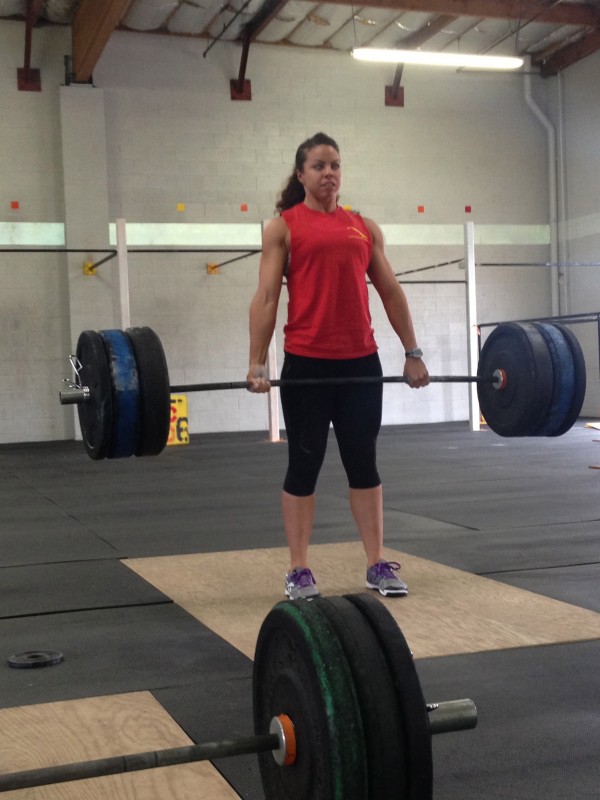
Breathing is so automatic that most people never think about it. Yet how you breathe in the gym has a big effect on your strength and your safety. In more than 30 years of coaching in San Diego, I’ve seen breathing and bracing fix more nagging back issues and stalled lifts than almost any other cue.
What’s wrong with shallow chest breathing?
Many people breathe mostly into the upper chest, with the shoulders rising on every inhale. Over a day, that adds up to thousands of tiny shrugs. As a result, the neck and upper traps work overtime, and the diaphragm, your main breathing muscle, does less than it should. Belly (diaphragmatic) breathing, on the other hand, lets the diaphragm do its job. And when you combine belly and chest breathing, you get a full, deep breath.
What are the benefits of deep breathing?
Slow, deep breathing helps calm the nervous system, which can lower feelings of stress and help you relax and recover between sets. It can also improve focus before a big lift. For lifters, the biggest payoff is better core stability: a full breath gives you something solid to brace against.
How do breathing and bracing work together?
Bracing means tightening the muscles around your midsection, including the abs, obliques, lower back and lats. Meanwhile, the diaphragm and deep core muscles create pressure inside your abdomen when you breathe in deeply. Together, breathing and bracing make your torso rigid, like a pressurized can. In turn, that stiffness protects your spine and lets force travel from your legs to the bar. In fact, strength coaches and physical therapists widely agree that proper breathing is the foundation of good core activation.
How do you practice deep breathing?
- Lie on your back with your hands on your lower waist and feet together.
- Relax, then slowly exhale all the air from your lungs. At the end, gently squeeze your abs to push out the last bit.
- Inhale slowly and feel your belly expand in every direction: front, sides and back, not just up.
- Once your belly is full, keep inhaling into your chest, with a hand on your chest to feel it rise.
- Start with a 5-second inhale, 5-second hold and 5-second exhale. Repeat 10 times.
- Over time, work up to longer counts, as long as you stay relaxed.
Deep breathing also pairs well with foam rolling and stretching, since it helps you relax into the work.
How do you brace for higher-rep sets?
- Take a full deep breath using the steps above.
- Forcefully exhale about a third to half of the air while tightening your entire midsection as hard as you can.
- Keep the brace while taking short, shallow breaths.
- To practice, hold the brace for a slow count of five, and repeat for 3 to 8 sets of 3 braces.
This works for most higher-rep exercises, including squats, deadlifts, bench press and push-ups. For example, on a squat, breathe and brace before lifting the bar out of the rack, then keep the brace through the set while taking quick breaths at the top.
How do you brace for heavy, low-rep lifts?
For heavy sets of 1 to 5 reps, take a full deep breath, tighten your whole midsection without letting any air out, and hold it through the hardest part of the rep. Then exhale near the top and reset before the next rep. Many powerlifters push their belly out against a lifting belt to increase that pressure, which is why belts help heavy lifts. Simply put, breathing and bracing matter more and more as the weight goes up.
Is breath-holding safe?
Holding your breath briefly during a heavy rep raises blood pressure for a few seconds. For healthy lifters, that’s generally considered safe. But if you have high blood pressure, heart disease, glaucoma or a history of hernia, ask your doctor first and use a partial brace with steady breathing instead.
Should you always breathe and brace this way?
Focus on it most for heavy strength work, and experiment with it for higher-rep sets. Many top strength coaches have their athletes breathe and brace hard for both. During fast-paced conditioning workouts, though, it’s hard to think about anything but moving well. If a natural breathing pattern feels better there, that’s fine. See also the bear complex, progressive overload and Tudor Bompa’s 5 basic laws of strength training.
Can a personal trainer teach breathing and bracing in San Diego?
Yes, and it’s one of the fastest ways to lift more safely. A coach can see whether you’re losing tension and fix it rep by rep. In my private Bay Park / Morena studio, it’s a skill I teach early and reinforce often. See my rates, and for weekly strength targets, the CDC recommends muscle-strengthening activity at least 2 days a week.
Want to lift stronger and safer? Text Chris at (619) 840-9099 for a free consultation.
Frequently Asked Questions
Have a question that isn’t covered here? See the full personal training FAQ.
What is breathing and bracing in weightlifting?
Breathing and bracing means taking a deep breath into your belly and sides, then tightening your core muscles around it to create pressure in your abdomen. That stiffens your torso, protects your spine and helps you lift more weight with better control.
Should I hold my breath when lifting weights?
For heavy sets of one to five reps, briefly holding a braced breath through the hardest part of the rep is common and helps stability. For lighter, higher-rep sets, keep a partial brace and breathe steadily. People with blood pressure or heart conditions should check with a doctor first.
How do I know if I’m bracing correctly?
Your whole midsection should feel tight all the way around, including the sides and lower back, not just the front abs. Your lower back shouldn’t round or over-arch during the lift. A coach can check this quickly by watching your setup.
Does a lifting belt replace bracing?
No. A belt gives your abs something to push against, which can increase pressure. But you still need to breathe and brace properly. So learn bracing without a belt first, then use one for your heaviest sets if you like.
Chris Keith has over 30 years of personal training in San Diego (since 1995) and was voted Best Personal Trainer by San Diego Magazine. He trains clients one-on-one at his private studio in Bay Park / Morena. Learn more about Chris or contact Chris to get started.