Many popular physical therapy exercises, like bird dogs, Bosu ball squats and straight leg raises, are great starting points. However, once they feel easy, they often stop building strength. The fix is usually simple: keep the goal of each exercise, then swap in a version you can load and progress over time.
I’m Chris Keith, and I’ve had over 30 years of personal training in San Diego. A lot of clients come to my Bay Park studio still doing the same home exercises their physical therapist gave them months ago. Here’s how I’d upgrade five of the most common ones.
Why do physical therapy exercises stop working?
Early in rehab, simple exercises are exactly right. They’re gentle, easy to learn and safe when pain is high. But your body adapts to whatever you ask of it. So if you do the same 10-second hold for six months, it eventually stops being a challenge.
In fact, the 2026 American College of Sports Medicine position stand on resistance training found that strength improves most with progressively heavier loads, a full range of motion and at least two sessions a week. In other words, the key is progression. We add reps to push-ups and weight to squats, so it makes sense to progress rehab exercises too.
1. Bird dogs: what should you do when they get easy?
Bird dogs train the glutes, the back muscles along your spine and the small stabilizers around it. They’re a good entry point after an injury or when you’re new to exercise. However, there isn’t much room to make them harder.
When they feel too easy, try these instead:
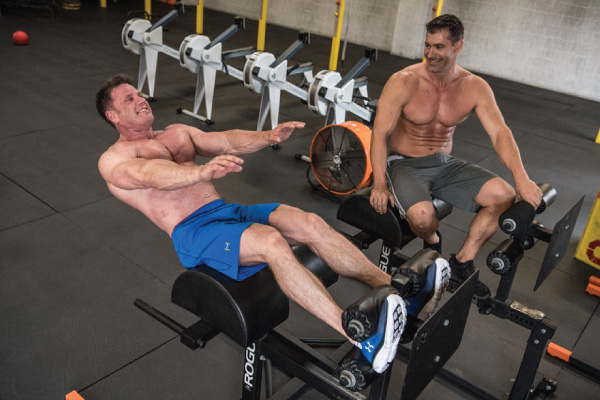
- Back extension holds on a Roman chair: hold still at first, then move through a comfortable range. Later, add a weight.
- Back extensions on an exercise ball: a good home option. Start with your arms across your chest, then progress to arms overhead.
- Bridges and hip thrusts: these train the same muscles, and you can add a lot more load or do them on one leg.
Keep in mind that bird dogs aren’t bad. The goal is simply to match the exercise to your current strength.
2. Are Bosu ball squats better than regular squats?
Usually not, if your goal is strength. Squatting on a wobbly surface looks challenging, but it limits how much weight you can safely lift. For example, the Canadian Society for Exercise Physiology position stand by Behm and colleagues notes that unstable surfaces can reduce force, power and range of motion. It also found that ground-based lifts like squats and deadlifts can work the core just as hard.
So instead of the Bosu ball:
- Squat on the floor and add weight gradually.
- Train the hip stabilizers directly with side-lying or banded hip abduction.
- Add balance with single-leg work, such as reverse lunges and single-leg Romanian deadlifts.
That said, unstable surfaces can still have a place in early rehab or for people who don’t want to lift free weights.
3. Do straight leg raises strengthen your quads?
Only early on. After knee surgery, straight leg raises are a classic milestone because they help with swelling and basic thigh muscle control. However, once that control is back, the exercise mostly works the hip flexors, not the quads.
To keep strengthening the quads, add:
- Seated leg extensions, on a machine or as a held contraction with the knee bent
- Step-ups and step-downs
- Squats or split squats, progressed over time
The point is to choose physical therapy exercises that match your goal. If the goal is stronger quads, pick exercises that load the quads. As always, follow your surgeon’s and physical therapist’s timeline after knee surgery.
4. Is the doorway pec stretch the best chest stretch?
Not for everyone. Many people find it hard to feel in the right place, and for some it irritates the shoulder, neck or nerves. If it doesn’t feel right for you, there are gentler options.
For instance, lie lengthwise on a foam roller with your arms by your sides and breathe slowly. Then, open your arms into a T or a Y, or do slow “snow angels.” Later, you can add light weights or move a dowel overhead. These positions usually feel more controlled. Similarly, any stretch, whether for the chest, neck or hamstrings, shouldn’t feel forced.
5. Do posture exercises fix bad posture?
Chin tucks, wall slides and hip flexor stretches are all fine. But if you sit at a computer 8 to 12 hours a day, then sit on the couch at night, the bigger issue is usually too little movement, not the shape of your spine.
Also, the link between posture and pain is weaker than most people think. A 2019 review of 41 systematic reviews by Swain and colleagues in the Journal of Biomechanics found no consensus that specific postures, sitting or bending cause low back pain. That’s why my first suggestion is simple: take a few 10 to 15 minute walks spread through your day. In fact, the CDC recommends 150 minutes of moderate activity a week for adults, and short walks add up quickly.
How do you know when to progress your physical therapy exercises?
Here’s a quick checklist I use with clients:
| Sign | What it usually means |
|---|---|
| You’ve done the same reps or holds for weeks with no effort | Time to add load, reps or a harder version |
| The exercise no longer matches your goal | Swap it for one that does, such as leg extensions for the quads |
| An exercise keeps irritating a joint or nerve | Try a gentler variation that works the same area |
| Pain is clearly worse the next morning | Hold steady or back off a little before progressing |
For more on that next-morning check, see my guides to tendonitis strength training and physical therapy mistakes.
Can a personal trainer help you progress after physical therapy?
Yes, and this is where many people get stuck. Your physical therapist gets you moving again. Then, once you’re cleared, a trainer can keep building strength for the months it takes to get fully back to golf, tennis, hiking or lifting.
That’s the focus of my strength training after physical therapy program. In private 1-on-1 sessions at 5260 Riley St in Bay Park, we take the exercises your physical therapist started and progress them safely, week by week. Many of my clients are 40 and up, so my training for adults 40+, 50+ and 60+ often goes hand in hand with this.
The studio is a short drive from Clairemont, Point Loma, Pacific Beach, Mission Valley and Old Town. Sessions are 1 hour, by appointment only. See packages on the rates page, or text Chris at (619) 840-9099 for a free consultation.
Frequently Asked Questions
Should I keep doing my physical therapy exercises after PT ends?
Usually yes, but they should evolve. The exercises your physical therapist gave you are a starting point. Once they feel easy, progress them with more load, more reps or harder versions so they keep building strength. Check with your physical therapist before changing a program after surgery or a recent injury.
Are bird dogs good for back pain?
They can be a good gentle starting exercise, especially when pain is high or you’re new to exercise. Once they feel easy, progress to back extensions on a Roman chair or exercise ball, or to bridges and hip thrusts. These train the same muscles and let you add load over time.
Are Bosu ball squats good for building leg strength?
Not really. Unstable surfaces reduce how much force you can produce, so squatting on the floor with gradually heavier weight builds strength better. To train balance and the hip stabilizers, add single-leg exercises like reverse lunges and hip abduction work instead. Bosu work can still have a role early in rehab.
What is better than straight leg raises after knee surgery?
Straight leg raises are useful early on for basic thigh muscle control. Later, exercises like seated leg extensions, step-ups, step-downs and squats load the quads more directly. Always follow your surgeon’s and physical therapist’s timeline for when to add each one after knee surgery.
Do posture exercises help with back and neck pain?
They’re fine to do, but research hasn’t shown that specific postures cause back pain. If you sit most of the day, adding regular movement, such as a few 10 to 15 minute walks, often helps more than posture exercises alone. Strength training for the back, hips and shoulders is also useful.
Ready to take your rehab exercises to the next level? Text Chris at (619) 840-9099 for a free consultation, or use the contact page.
This article is general information, not medical advice. If you’re recovering from surgery or an injury, follow your doctor’s or physical therapist’s guidance.
Research and Guidelines Cited
- Currier BS, et al. American College of Sports Medicine Position Stand. Resistance Training Prescription for Muscle Function, Hypertrophy, and Physical Performance in Healthy Adults. Medicine & Science in Sports & Exercise, 2026.
- Behm DG, et al. Canadian Society for Exercise Physiology position stand: The use of instability to train the core in athletic and nonathletic conditioning. Applied Physiology, Nutrition, and Metabolism, 2010.
- Swain CTV, et al. No consensus on causality of spine postures or physical exposure and low back pain: A systematic review of systematic reviews. Journal of Biomechanics, 2019.
- Centers for Disease Control and Prevention. Adult Activity: An Overview.
Chris Keith has over 30 years of personal training in San Diego (since 1995) and was voted Best Personal Trainer by San Diego Magazine.