A good personal trainer for women over 50 builds strength, bone-loading and balance work into a plan that fits your joints, energy and goals. Then they add weight gradually and safely. In short, look for a coach who assesses you first, teaches technique and progresses you over time. Two or three sessions a week is a strong start.
I’ve spent over 30 years of personal training in San Diego, and I’ve coached clients of every age, from teenagers to older adults. So here’s what I think matters most after 50, what the research says about lifting, and when to check with your doctor first.
Why should women over 50 lift weights?
Because muscle and bone both tend to decline with age, and strength training is one of the best ways to push back. For example, the Mayo Clinic’s guide to menopause and weight gain explains that muscle mass usually drops with age while fat rises. As a result, your body burns fewer calories at rest. The same guide notes that bone density declines with menopause, and it recommends strength training at least twice a week.
The CDC’s physical activity guidelines for adults say the same thing in plain numbers. Adults need about 150 minutes a week of moderate activity, such as brisk walking. In addition, they need at least 2 days a week of muscle-strengthening work.
However, most people I meet already walk. What they’re missing is the strength piece. That’s where a coach helps most.
What should a personal trainer for women over 50 focus on?
In my studio, the plan starts with how you move today, not with a generic workout. Then we build around a few priorities:
- Full-body strength: squats, hip hinges, rows, presses and loaded carries, because these patterns carry over to daily life.
- Bone-friendly loading: weights that gradually get heavier, since bones respond to challenge, not to light reps forever.
- Balance and power: step-ups, single-leg work and lighter moves done quickly, so stairs and curbs feel easier.
- Mobility: enough range in the hips, upper back and shoulders to lift well, without hours of stretching.
- Recovery: sleep, protein and rest days, because progress happens between sessions.
Also, the right coach adjusts on the fly. For instance, if your knees are cranky on a Tuesday, we change the exercise and keep training. After all, a session you can finish beats a perfect one you can’t.
Is heavy lifting safe for women over 50?
For many women, yes, with good coaching and a gradual build. In fact, the LIFTMOR randomized trial in the Journal of Bone and Mineral Research tested it directly. It followed 101 postmenopausal women with low bone mass, average age 65. Half trained twice a week for 8 months, in 30-minute supervised sessions of 5 sets of 5 heavy reps.
As a result, that group improved bone density at the spine and hip, and they did better on every test of physical function. Only one minor problem was reported, a lower back spasm. Keep in mind, though, that this training was closely supervised and built up step by step. So it isn’t a reason to load a barbell alone on day one.
That matches my approach as a personal trainer for women over 50. First, we master the movement with light weight. Then we add load in small jumps, week by week. Finally, if you have osteoporosis or a past fracture, we get your doctor’s input before going heavy. If you’d like more on the benefits, read my post on the benefits of a personal trainer for women.
How do you choose a personal trainer for women over 50 in San Diego?
Look past the before-and-after photos. Instead, ask these questions on your first call:
- Do you assess me first? A good trainer checks how you squat, hinge, reach and balance before writing a plan.
- What are your credentials and experience? For example, I’m NASM certified, with over 30 years of coaching.
- How will you progress me? Listen for a clear plan that adds weight gradually, not random workouts.
- Will you work with my doctor or physical therapist? The answer should be yes.
- What’s the setting like? Many people feel more at ease in a private studio than on a busy gym floor.
On that last point, my private training studio vs. big-box gym guide compares the two. Also, my training is 1-on-1 and by appointment only, at my studio in Bay Park. It’s an easy drive from Clairemont, Point Loma, Mission Valley and Pacific Beach.
What does a good training week look like?
Here’s a simple week I often suggest as a starting point. Then I adjust it to your schedule, recovery and goals.
| Day | What to do | Why |
|---|---|---|
| Monday | Strength session with your trainer | Squats, hinges, rows, presses and carries |
| Tuesday | Brisk walk, 30 to 40 minutes | Builds toward 150 aerobic minutes a week |
| Wednesday | 15 minutes of mobility and balance | Keeps hips and ankles moving well |
| Thursday | Strength session with your trainer | Heavier sets, plus power and balance drills |
| Saturday | Longer walk or bike ride around Mission Bay | More aerobic time, and it’s fun |
| Sunday | Rest | Recovery is part of the plan |
Because two strength days meet the CDC’s minimum, this week covers the basics. Later, some clients add a third session or a home routine.
How much does a personal trainer for women over 50 cost?
In my studio, every session is 1 hour and 1-on-1, and the price depends on package size. Currently, sessions run from $125 to $275 each, and larger packages cost less per session. You can see every option on my rates page.
Also, if you’re over 40 and want a program built for this stage of life, my personal training for adults 40, 50 and 60 page explains how I work.
Ready to get stronger after 50? Text Chris at (619) 840-9099 for a free consultation.
When should you check with your doctor first?
Exercise is a good fit for most women over 50. However, I’m a trainer, not a clinician, and I don’t diagnose or treat. So see a doctor or physical therapist before you start, or before you train harder, if any of these apply:
- Chest pain or pressure, unusual shortness of breath, dizziness or fainting (call 911 for chest pain)
- Heart disease, high blood pressure, diabetes or another ongoing condition
- Diagnosed osteoporosis, or a fracture from a minor fall
- A recent fall, injury or surgery
- Numbness, tingling or weakness in your arms or legs
- Joint pain at night or at rest, or pain that keeps getting worse
- Loss of bladder or bowel control (get emergency care)
In other words, when in doubt, get checked first. Then, once you’re cleared, I’m glad to work alongside your doctor or physical therapist.
Frequently Asked Questions
Is it too late to start strength training after 50?
No. Muscle and bone still respond to training in your 50s, 60s and beyond. For example, in the LIFTMOR trial, women with an average age of 65 improved bone density and function with supervised heavy lifting. Start with light weights and good technique, and then add load gradually. Also, check with your doctor first if you have a health condition.
How often should a woman over 50 lift weights?
The CDC recommends muscle-strengthening activity at least 2 days a week, plus about 150 minutes of moderate aerobic activity, such as brisk walking. In my experience, two strength sessions a week is a great place to start. Later, some women add a third session or a short home routine once their recovery and schedule allow it.
Will lifting weights make me bulky?
Very unlikely. Building large muscles takes years of focused training and eating for size. Instead, most women over 50 who lift get stronger, move better and feel more confident. In addition, strength training helps protect bone density, which declines with menopause. So the goal is strength and independence, not bulk.
What should I look for in a personal trainer for women over 50?
Look for a certified trainer who assesses you before writing a plan, explains how they’ll add weight over time, and is happy to work with your doctor or physical therapist. Also, experience with clients over 50 matters. Finally, choose a setting where you feel comfortable, such as a private 1-on-1 studio.
Can I train with osteoporosis?
Many people with osteoporosis can strength train with the right guidance, but get your doctor’s input first. Then work with a coach who starts light and progresses slowly. For instance, the women in the LIFTMOR trial had low bone mass and trained under close supervision. However, a trainer shouldn’t diagnose or treat osteoporosis, so keep your doctor involved.
Research and Guidelines Cited
- Centers for Disease Control and Prevention. Adult Activity: An Overview.
- Mayo Clinic. The reality of menopause weight gain.
- Watson SL, et al. High-intensity resistance and impact training improves bone mineral density and physical function in postmenopausal women with osteopenia and osteoporosis: the LIFTMOR randomized controlled trial. Journal of Bone and Mineral Research, 2018.
Ready to feel strong after 50? Text Chris at (619) 840-9099 for a free consultation, or contact Chris online. Sessions are private and 1-on-1 at the studio at 5260 Riley St in Bay Park.
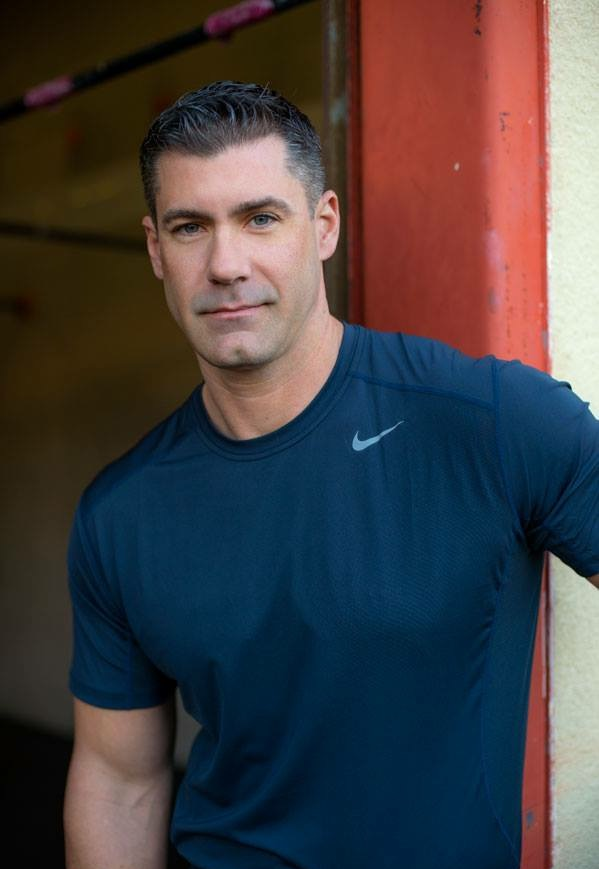
Chris Keith has over 30 years of personal training in San Diego (since 1995) and was voted Best Personal Trainer by San Diego Magazine.