
Feeling sore after working out is normal, especially in your first few weeks of a new routine. It’s called delayed onset muscle soreness (DOMS). It usually peaks 24 to 72 hours after exercise and fades within a few days. Gentle movement, good food, water and sleep help it pass, and it gets much milder as your body adapts.
An open letter to new clients from Coach A’verria Martin, Ph.D.
We hope you’re enjoying your first workouts! We loved training with you and are excited to teach you the fundamentals and help you get in the best shape of your life. There’s no doubt that right now you’re feeling sore and maybe a little tired. This is a normal response to starting a workout routine. So during this time, it’s important to take care of yourself both physically and mentally.
It’s easy to get discouraged by your body’s reaction to exercise. Just remember that this is your body taking notice of the healthy habits you’re putting into place. Soon, the soreness will be replaced by more energy, more strength and a real sense of accomplishment. In the meantime, take this as a chance to remember why you started. Write your reason down and put it somewhere you’ll see it every day!
Why you feel sore after working out
When you challenge your muscles in a new way, especially with lowering (eccentric) movements like the down phase of a squat or lunge, you create tiny amounts of stress in the muscle fibers. Your body responds with a repair process that includes mild inflammation, which you feel as stiffness and tenderness. That repair process is also how your muscles adapt and get stronger.
Contrary to an old myth, next-day soreness isn’t caused by lactic acid. Lactate clears from your muscles within an hour or so after exercise. The soreness you feel a day or two later comes from that repair process instead.
How long will you be sore after working out?
Typically, delayed onset muscle soreness starts 12 to 24 hours after a workout, peaks around 24 to 72 hours, and fades within about 3 to 5 days. The good news is that your body adapts quickly. After a couple of weeks of consistent training, the same workouts cause much less soreness. In other words, the hardest part is the beginning.
What helps when you’re sore after working out
Here are my go-to strategies for new clients. For a complete routine, see Chris’s guide to exercise recovery tips.
1. Keep moving
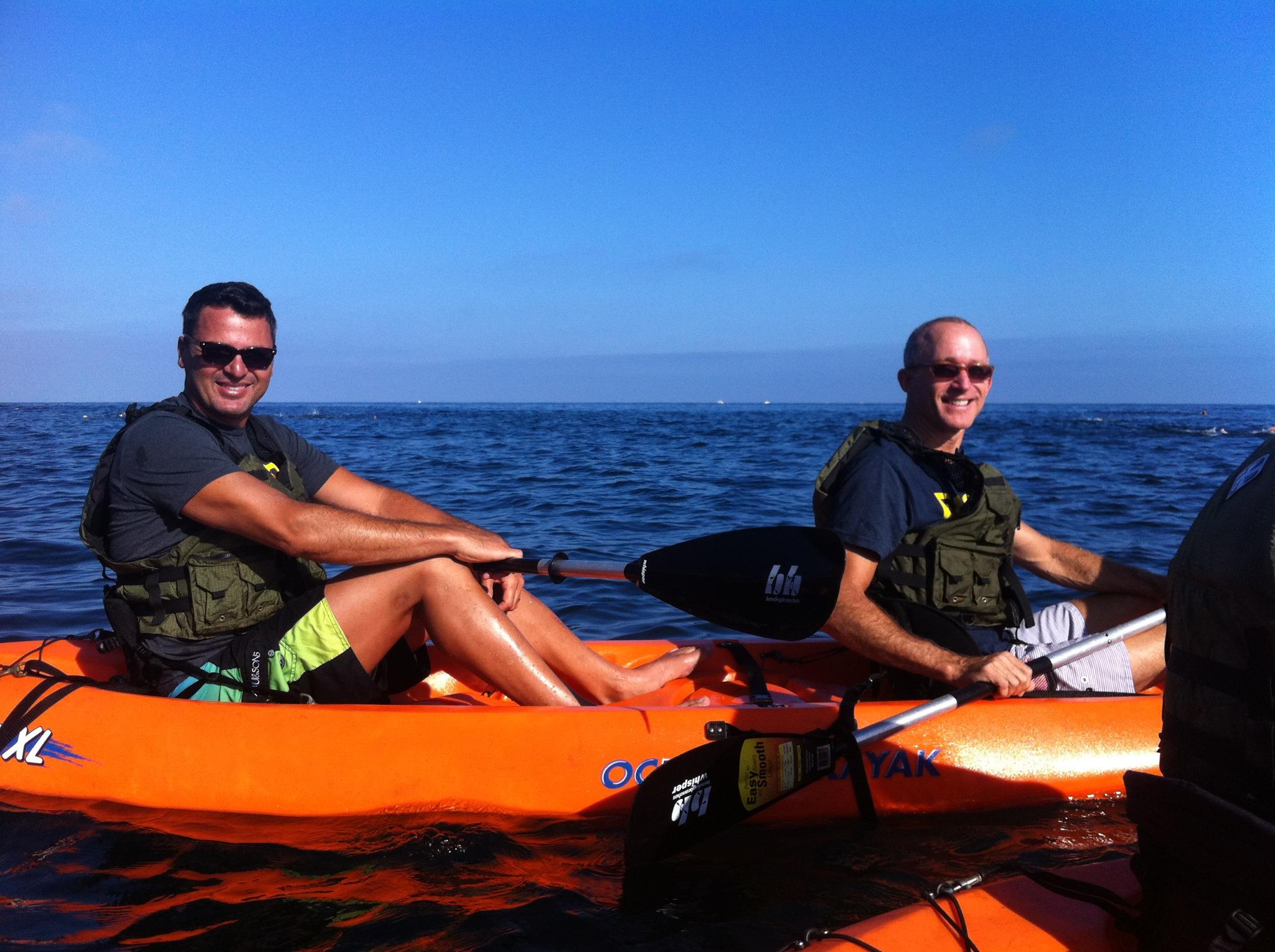
When you’re tired and sore, it’s tempting to sit on the couch all day. However, gentle movement usually makes you feel better. Try 15 to 30 minutes of easy activity, like walking, an easy bike ride, light yoga or a paddle on the bay. This “active recovery” increases blood flow and eases stiffness, and it feels good for body and mind.
2. Stay hydrated
Water supports nearly every process in your body, including muscle function, digestion, temperature control and recovery. Even mild dehydration can cause fatigue, headaches and irritability. So sip water throughout the day, and drink a bit more on training days and hot San Diego afternoons. Pale yellow urine is a simple sign you’re drinking enough.
3. Eat to repair
Nourishing your body is a big part of recovery. Focus on lean protein, such as chicken, turkey, fish and eggs, along with low-glycemic carbs like oats, quinoa, sweet potatoes and legumes, plus plenty of vegetables and healthy fats like avocado and nuts. These foods help repair muscle and supply fiber, vitamins, minerals and antioxidants. For ideas, explore the Eating for Success series.
4. Stretch and move gently
After workouts and active recovery days, take 10 to 15 minutes for gentle stretching or mobility work. Stretching won’t erase soreness, but it can help you feel less stiff, improve flexibility and give you a calm way to cool down. Your trainer can scale stretches to fit your body.
5. Sleep
Most muscle repair happens while you sleep, so a good night is one of the best fixes when you’re sore after working out. Therefore, aim for 7 to 9 hours a night, especially in your first weeks of training.
Should you work out when sore?
Usually, yes, as long as it’s normal muscle soreness. Train at a lighter effort, work different muscle groups, or do an active recovery session. Also, skipping workouts entirely tends to make the next session feel just as hard, because consistency is what helps your body adapt. The CDC recommends muscle-strengthening activity at least 2 days a week for adults, and when you train regularly, you make greater gains, enjoy the workouts more and feel less wiped out.
When being sore after working out is a warning sign
Normal soreness feels like general tenderness in the muscles you worked and improves day by day. On the other hand, get checked by a medical professional if you notice:
- Sharp or stabbing pain, or pain in a joint rather than a muscle
- Swelling, bruising or pain that gets worse instead of better
- Soreness that lasts more than about a week
- Severe muscle pain with weakness, or dark or cola-colored urine, which can signal a rare but serious condition called rhabdomyolysis and needs prompt medical care
Sore after working out? Don’t get discouraged
At times, we’re our own worst enemies when it comes to getting and staying healthy. When you feel discouraged, try these tricks: stand up and move around, lift your shoulders and head toward the ceiling, and take a few deep breaths. Then think positive thoughts: you can do this. Dare to fail, because the person who never fails is the person who never tries. Finally, throw away your excuses!
Being sore after working out is part of the process, and we know from experience that starting a new program is both amazing and challenging. A good program is scaled to your fitness level, so tell your trainer how you’re feeling. If you’re new to strength training, Chris’s strength training for beginners guide explains how to start at the right level. Want a program that challenges you without leaving you wrecked? Text Chris at (619) 840-9099 for a free consultation at his private studio in Bay Park / Morena, San Diego.
This post was originally written by Coach A’verria Martin, Ph.D., as a letter to new members and updated in 2026 by the Chris Keith Personal Training team with current exercise science. Chris Keith has coached clients in San Diego for over 30 years. Contact Chris to get started.
Frequently Asked Questions
Have a question that isn’t covered here? See the full personal training FAQ.
Is it normal to be sore after working out?
Yes. Soreness 1 to 3 days after a workout is called delayed onset muscle soreness, or DOMS. It’s most common when you start a new program or try new exercises, and it fades as your muscles adapt.
How long does soreness after a workout last?
Most muscle soreness starts 12 to 24 hours after exercise, peaks between 24 and 72 hours, and fades within 3 to 5 days. After a few weeks of consistent training, the same workouts cause much less soreness.
Does being sore mean I had a good workout?
Not necessarily. Soreness mostly reflects doing something new or unfamiliar, not how effective a workout was. As you adapt, you’ll get sore less often while still getting stronger.
What is the fastest way to relieve muscle soreness?
There’s no instant fix, but gentle movement, light stretching, enough protein, water and good sleep help most. Some people also find foam rolling, massage or a warm shower helpful for easing stiffness.